

WALKING SIMULATOR RESEARCH
What Remains of Edith Finch
What remains of Edith Finch is a walking simulator based around exploring the past and memories of the main character's home and family life. The majority of the game is set in a large house which has a very linear playstyle, with most areas only able to be accessed after completing smaller stories before it.
The game induces a sense of curiosity, encouraging the players to be interested in the story behind everything that they see, with tens of tiny details that trigger the character to reminisce about how something happened.
The games themes begin on a hopeful note, after seeing the first significant memory (one of the family members' deaths) the game slowly begins to take a darker tone. Each family member is remember through the day that they died, eventually leaving the game in a darker ending.
The developers heavily used interactions with items and triggered areas to begin the memories, in most cases, the player will look or interact with something and the character; Edith, will talk to themselves about the story behind that. In some cases the perspective will change from Edith to a more relevant character in the memory such as other family members.
In most cases, the player is the only who initiates the action that causes the family members death, for example one character died after playing on a swing near a cliff, the player controls the motion of the swinging and it eventually gets too much; causing the characters death.
This sense of responsibility for each of the deaths really heavily enforces the impact that each of them give. It also helps the players remember the deaths if they are mentioned in a future part of the games story.
The game was developed by Giant Sparrow and published by Annapurna Interactive in 2017. The game is able to trigger some sense of nostalgia with almost everyone, whether it is relating to the unique childhood memories we have, or the more solemn memories of passed loved ones.
Despite it's heavy themes and often darker tones, the game still manages to fill lots of areas with more positive emotions, even displaying several humorous moments throughout the story.
The game definitely attempts to convey several moral lessons and messages, from keeping in tune with past events, getting through grief of lost loved ones. "Ultimately, the game is about what it feels like to be humbled and astonished by the vast and unknowable world around us." (What Remains of Edith Finch on Steam, 2022)

BRAINSTORMING & MIND-MAPS
Interactivity & Game Mechanics
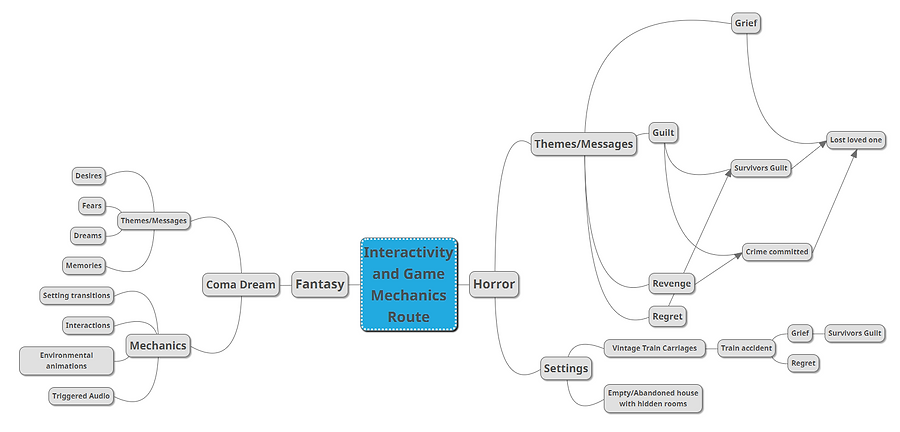
One of the routes of the project is to focus effort on creating interactivity throughout the level, and creating multiple interesting and complex game mechanics in order to create a game which has an interesting and intuitive flow.
There are several positives to doing a level this way; firstly I would not have to spend large amounts of time creating lots of models and applying lots of textures. This route does sound more exciting to me however due to the timespan that the project has, I am not confident that I would be able to create a fully fleshed out scene with lots of visual detail and lots of textures and advanced lighting. So many parts of the process for doing these things can be very tedious and time consuming.
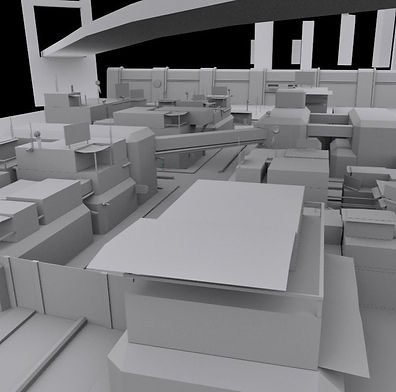
However, If I were to focus effort on making interactivity and working on game mechanics it may make it a lot easier, the level itself could be made of more simple geometric shapes that are still strategically placed in important areas to create a more interesting level, however the models themselves would be very simple and largely untextured or white. I could then focus on creating lots of blueprint game mechanics in Unreal Engine which I feel I would be able to do much better in the timespan that we have.
Art, Modelling & Texturing


The art, modelling and texturing route is more interesting to me, at least in the broad category of which they all fit in; design. However, I'd much prefer to design the level, create it's visual elements and plan out what interactive features and mechanics the level has than spend lots of time modelling and texturing.
I think that I can satisfy my desire to design the layout and play of a game by going through with the interactivity and game mechanic focused route.
This route would have been a better choice if I had more confidence in my modelling ability, texturing ability and the amount of time that I have to do those things.
Initial Ideas - Game Mechanics
I decided on doing the interactivity and game mechanic route as I believe that I will be more able at creating something that is interesting to explore and play. I am also relatively confident that I will be creating a game that fits into the Horror genre. I am thinking about doing this genre as there are a lot of things that I can do in terms of game mechanics and things that are interactive such as; triggered sounds, animations, jump-scares, horror elements, lights flickering, sprint mechanics and and objectives. I am also able to implement the ability to collect items such as keys and I could create a small simplistic HUD (Heads up display) which displays what keys the character has.
I think that this is a good idea for a genre to work on as it compliments one of the criteria, instead of me having to work with the genre to create the game mechanics and the project, the genre instead works with game mechanic requirements and makes the overall project easier without compromising overall. In summation; the genre simply fits into the route that I decided to take with this project.
CONCEPTS &IDEAS
THEMEING AND GENRE IDEAS
Horror Genre
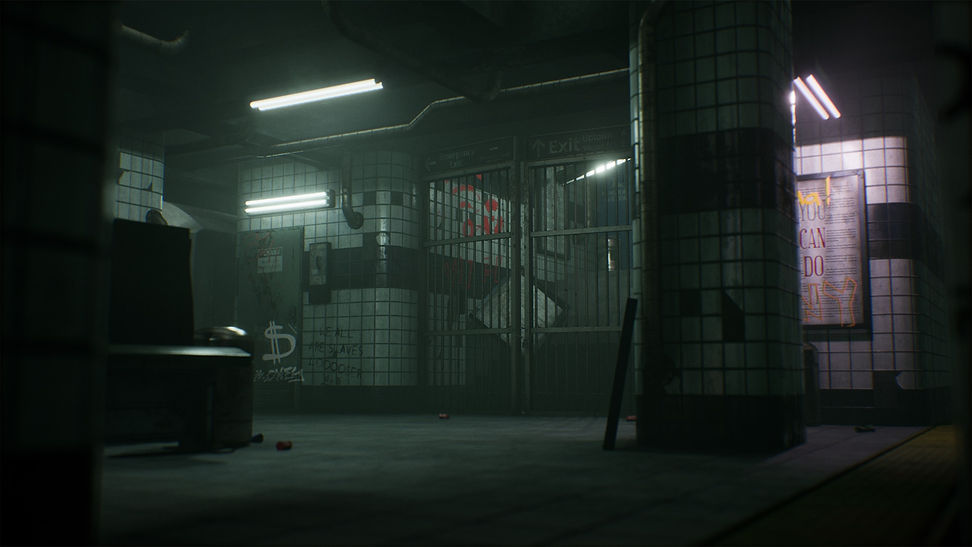
I already have experience level planning and creating horror levels in map and level editors. In my spare time I have already done extensive research into how horror games are made, what things make a horror game scary and what make the scares cheesy. I've also done research into the more discreet design elements which usually go unnoticed in terms of the affect that they have on the players. For example changes in lighting, whether it be colour, intensity or brightness can depict and suggest different moods.
Most games tend to focus on audio for these environmental changes however it is possible to get the same effect and sometimes a stronger effect using visual ques.
The fact that i already have experience creating levels in this genre gives me an advantage and I wouldn't be getting the best out of myself if I were to decide to do something else. My existing knowledge and experience makes this decision a no brainer.
I did research into different options though, I want to make fullbacks in-case I loose confidence in my ability. Looking into different genres and game ideas also allows me to gather more ideas and theming that I can bend into the theme that I intend to do.
Fantasy Genre
Creating something within this genre would be have large amounts of content that would be easy and large amount which would be challenging. Level limitations could be relaxed a lot more. For example; environmental animations would not have to follow any realism. (A tree could fall and slow to a stop before it hits the ground) In the Fantasy genre; it's very easy, and somewhat over used, to use the fact that the would is fantasy to explain away things that don't make sense.
I could use this to my advantage. I could create lots of different unique mechanics and features which their existence, if not fitting, could be explained away simply using the fact that the environment is entirely fantasy.
I do still prefer the idea of creating a horror level. The concept to me feels a lot more exciting and something that I can be motivated about, also the idea of creating any ideas that I had within the fantasy genre does not come near to the ideas that I have for a genre level.

EXPLORING SETTING & NARRATIVE
Setting Ideas & Theming
I have thought about several different settings for the level, I have mostly decided on one of them though. It's a setting for a horror map which I had intended to create in the past but decided against doing so due to a lack of mechanics. (This was when I was creating levels for fun in level builders & map editors.)
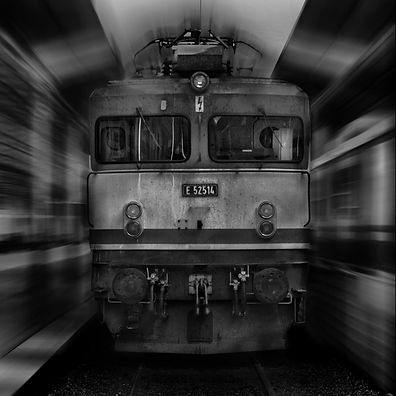
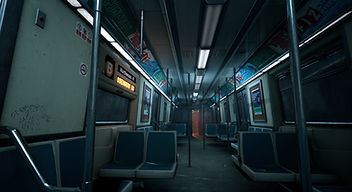
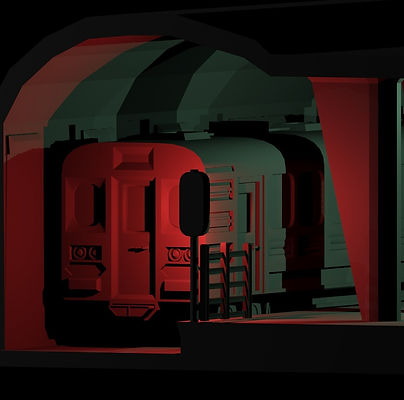
The setting is a train, more specifically a semi vintage train where the character would progress through the carriages in a linear fashion. At first it seems as if this would be extremely limiting in terms of mechanics however, I don't believe this is the case. With the ability to use train cars as rooms I don't have to make all of the carriages passenger based. If I hold off on giving myself lots of limitations I can definitely create lots of different and unique mechanics and features.
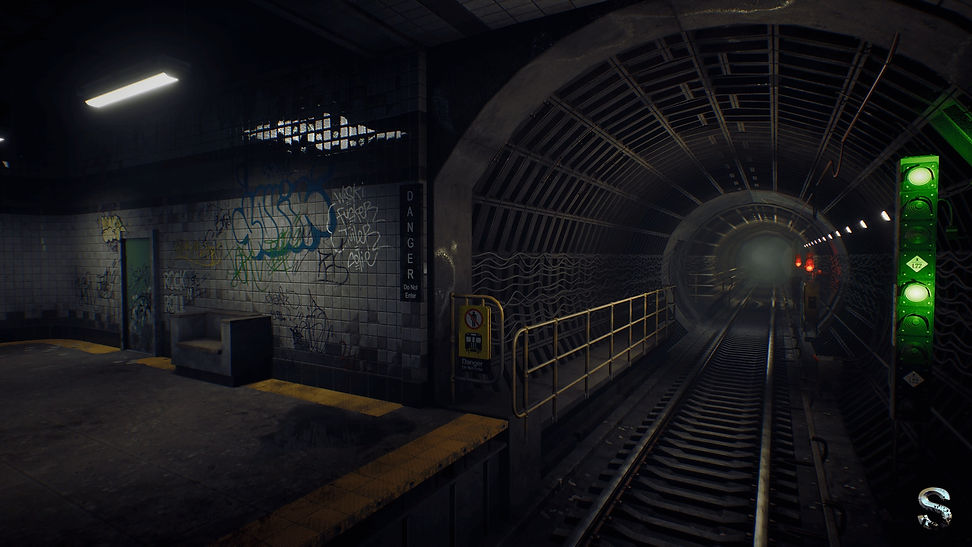
The overall theming and mood would be that the character is on an empty train, most likely an underground train for a more easier environment. (I would simply have to make a white-box tunnel around the train to provide lighting depth through windows.
Time settings/stylisation:
-
New York style subway trains
-
Vintage style carriages
-
Abandoned ghost train
INTERACTIVITY & GAME MECHANICS GENRE IDEAS

INTERACTIONS & MECHANICS
Game Mechanic Exploration
There are many different mechanic ideas that I could implement into a horror based walking simulator. Due to the fact that it is a walking simulator, removes the possibility of me adding in an actual enemy. So health bars and other related mechanics won't be present in my project. Player player won't be able to die or fail but I want to create the environment and tell the story in a way that the players feel as if they could loose.
In order to do this I need to put something at stake, the character needs to have something that they fear to loose. Generally in games, this is the players' life. I may decide to task the player to pick an item up at the beginning of the game, which they would have to carry with them throughout the level. Depending on the item, this could be the thing that the players fear to lose.
As there will be no enemies (That the player can interact with and vice versa) I will need to convey that the player is not alone throughout the mechanics alone. I could do this through environmental animations, audio or visual details.
One of the ideas that I have is that at one point, the power cuts off and the player must go to a maintenance hatch to reset the power. This could also require a key to open that hatch. Small ideas such as this allow me to branch into different ideas and develop constants for overall mechanics.
CONCEPT ART INITIATION
Floor Planning & Level Layout
I began creating concept art for the project on the layout of the level, planning the way that the level will flow, marking out where certain events will occur and using these plans as a solid reference and foundation for planning what models will be required and getting an overall more clear idea on the mechanics I will be able to use and where I will be able to implement them.

PLANNING
MOODBOARD
Theming & Inspiration




MOODBOARD ANALYSIS
Colour Pallets & Lighting
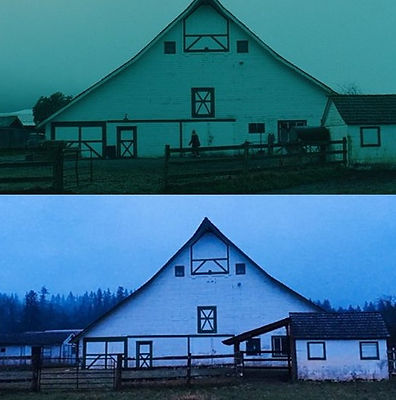
Sticking to a colour pallet at least in terms of lighting is very important in keeping a sense of consistency throughout a horror level. This can even be used to show extreme events if the colour pallet suddenly diverts and changes to darker or lighter colours.
Due to the fact that I will be creating a level with the focus of gameplay mechanics and interactions, I will only be able to use a colour pallet through the means of lighting.
I will be able to use this as an interactable mechanic such as the one mentioned above in the Game Mechanic Exploration. Using the environment and making interactions out of them is important in making the interactions and level feel natural. If there are mechanics that feel completely separated from the environment they are in, it can easily make them feel pointless, forced or even damage any immersion that was built.

FINAL DECISIONS & JUSTIFICATION
Theming Justification
If I want to create the level based around the idea that I like, I need to justify to myself why I am doing it. This is important as it will help me get a more clear idea of my overall vision for the project.
I want to learn lots of new techniques and have confidence in my ability to create a final working product on my own. This project will help me do that. What are the primary things that I want to achieve by completing this project?
SELF ANALYSIS USING "SWOT"
Strengths
One of my biggest strengths going into this project are that I have created interactive horror levels in the past. This allows me to skip a lot of research in terms of how these kind of levels are created and allows me to focus on more direct research for this specific project.
I'm already able to apply knowledge and techniques that I have learnt creating levels on my own. I also have a good foundation of knowledge in terms of blueprint creation in Unreal Engine. In previous projects; I was able to learn a lot about how the blueprint system works, learning that a lot of the features are made in a way that allows you to teach yourself as long as you do things logically and break down what you want a feature to do down to the fundamentals.
Weaknesses
I am much less confident in my ability to create models, which I will need to do for this project. Although most of my models will be geometrically simple at least visually, some of them may be complicated to create. For example, the primary setting for each section will need to be modelled. I will have to create a low poly subway style train car interior which is recognisable. That's quite a challenge for me however due to the fact that it is one of the few models that there are in this level, I think it is achievable and I believe that I should be able to do a good job of doing it.
Opportunities
There are many learning opportunities within this final project and I am excited to engage in some of them. Of course there will be the usual of increasing my experience and ability in programs such as 3Ds Max and Unreal Engine. More specifically learning more in-depth techniques such as creating blueprints and mechanics. As well as some more advanced modelling techniques.
Some unique opportunities for this project would be the scale of the project and the fact that we are doing it on our own. This means I will be able to learn more time management skills, planning skills and keeping track of everything that I am doing.
I will need to check myself to ensure that criteria are completed in time for the next steps. Something I have struggled with slightly in the past. However, due to the amount of learning I have already done, I am confident that I can achieve it within this final project.
Threats
There aren't many threats to this project. That doesn't mean this project is without them though. There are the general things that can threaten my ability to complete everything in time such as falling ill, possible yet unlikely lockdowns due to Covid-19, and loosing work due to computer issues or forgetting to save for example.
Fortunately the more likely threats such as loss of work are avoidable and there are things I can do to mitigate the risk. For example, I can enable any autosave features on any programs which have them. This should decrease the amount of work lost if I don't save or a file is lost. I can also backup and make copies of important files and models.
CONTINGENCY PLAN
Ensuring Project Completion
Scenario
Data Loss
(Files not saving fast enough)
Time Loss
(Missed days & Illness)
Practical Focus
(No written work done)
Loosing Motivation
(Loosing interest/ becoming exhausted)
Probability
3/10
2/10
3/10
4/10
Severity
9/10
Could be very impactful if saves of Unreal Engine are lost.
7/10
Lots of progress is usually made in a day.
6/10
7/10
Mitigation
Regularly saving backups under different names & saving with plenty of time.
Try to not loose days, ensure catch-up if any days are lost.
Ensure that written work is done regularly.
Try to give myself a variety of different things to work on so that I do not get exhausted.
PROJECT PROPOSAL
Comprehensive Project Plan

Audience
It’s difficult to direct a specific player base due to the fact that it’s a mechanical demo, The fact that the environment will mostly be white with relatively simple models heavily takes out from the fact that it is a horror.
I have came up with a potential audience if it were to be detailed and textured. These would be potential employers, universities and lecturers which fit into the academic side. There would also be a more casual audience such as fans of the genre who wanted to test out a demo. The product would likely be mainly focused towards PC players due to the ease of maintenance and it's generally less work creating a product for PC players
LEVEL DESIGN


LEVEL DESIGN RESEARCH
Creating a Horror Environment
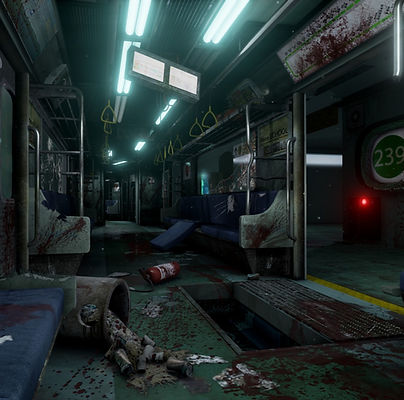
The basis of horror usually tends to rely on a degree of relatability. Often we find environments scary because we can relate to them. Usually the environment is something that most people would be able to describe. Most people should be able to explain what an abandoned house may be like.
The environment will also often communicate the mood. This will often be done through colour of the environment as well as lighting. Other techniques will include varying light and dark, so having more or less shadows, darker or softer shadows & harsher or softer lighting.
The location of a horror environment is one of the most important factors in terms of ensuring that it will be scary. Of course, any environment can be scary if the right techniques are applied, however some environments are naturally scary which takes a lot of work off developers.
Abandoned buildings and hospitals are much more scary than a new office or home. This is because they have history associated with them. These locations already have stories and things that have happened there, this when applied with the humans tendency to assume things are worse than they actually and reasonably are makes creating horror settings extremely easy as the viewers and players do half of the work for you.
On the other hand, brand new buildings such as offices and homes don't really have much of a history associated with them. So they tend to be less scary, or take a lot more work to educe the same fear found in an old house.
Sources for continued research:
Avoiding Clichés
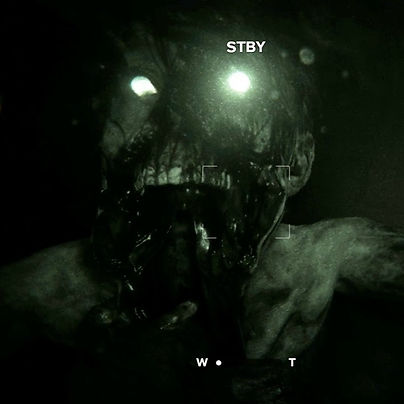
Clichés are expected at least once in most games, the reason that they exist is because they work. A jump scare is one of the most common horror game clichés, most people would say that they're overused and don't really scare them. However, the chances are that when they encounter a jump scare in a game it still makes them jump.
So if they work then why should I avoid them? It's much less of the idea to avoid them entirely and more so to be aware when I'm using them and to use them cautiously. Clichés, especially for horror can easily take out from the experience and even momentarily destroy someone's immersion. This is because they are able to tell that this is a technique that the developers have used to try to scare the players. Rather than something that fits naturally into the game or story.
This doesn't mean that jump scares are never going to be scary again, there are absolutely many instances that a jump scare can feel natural and fit with the game. But putting one in because the player needs to be scared will rarely work without a lot of additional work making it fit in properly.
This can be applied to most clichés, they're often seen as cheap overused and annoying techniques or things that are put into games for an effect with little effort. They're seen as a lack of creativity on the developers half. However they can be used, they can fit into scenes and feel natural but that is the big point, if you're putting a cliché into your project purely for the sake of including the cliché it probably wont feel natural and it will feel cheap. However if it is put in because you genuinely feel as if it will work with the build up and scene it can give a really good affect,
Pacing & Predicting Players
Pacing should be steady yet slow. If pacing is too fast then anticipation built up for certain moments will be spent too quickly. You could build up for a scare for several minutes, but if the game moves on too quickly after the scare it will feel disappointing. The aftermath of scares are also a really good moment to exploit as players will usually feel a sense of relief and safety. Usually the player will not encounter anything else scary for a short while after a scare as games often give the player time to breathe or begin to build up towards another scare. However, If there is a second scare very shortly after the first it could be very effective as half of the struggle in a good scare is expectation.
On the other hand some games often influence the players into expecting a scare and will use reverse phycology in creating a scary moment. Some players when encountered with a tense moment may feel that the game won't do anything scary as the player would naturally expect it.
However, if a game prays on using the same techniques repetitively and doesn't change up how the game builds up to moments and how those moments pay off, the game will quickly become predictable.
The challenge is knowing what the player would think in the moment, knowing what the player might expect in that moment and then doing the opposite.